
On 7 July 2026, Google Search Central announced platform properties, a new type of property in Search Console. Through this feature, creators, publishers and businesses can connect Instagram, TikTok, X and YouTube accounts to see how their social and video content performs in Google Search and Discover.
The change matters for promotion because Google is beginning to treat websites, video clips and social accounts as parts of the same digital presence. For businesses, this means social media should no longer be analysed only within the platforms' native applications, but also through the way posts are discovered in Google.
What platform properties are in Search Console
Until now, Search Console was mainly associated with websites: domains, URLs, sitemaps, indexed pages and performance in Google results. The new property type extends reporting to external social and video accounts. Instead of checking only a domain, you can add a property for an account or channel on one of the supported platforms.
At launch, Google names four available platforms: Instagram, TikTok, X and YouTube. Each account or channel must be added as a separate property, and verification is completed by authorizing the connection. The feature is being distributed gradually, so not every account will see it at the same time.
Which data can be monitored
Platform properties show how social and video content performs in Google, not within the social platform itself. The difference matters. Search Console does not tell you how many views a video received in TikTok or how many impressions a post received in the Instagram feed. It shows how that content was discovered through Google Search and, in certain cases, through Discover or Google News.
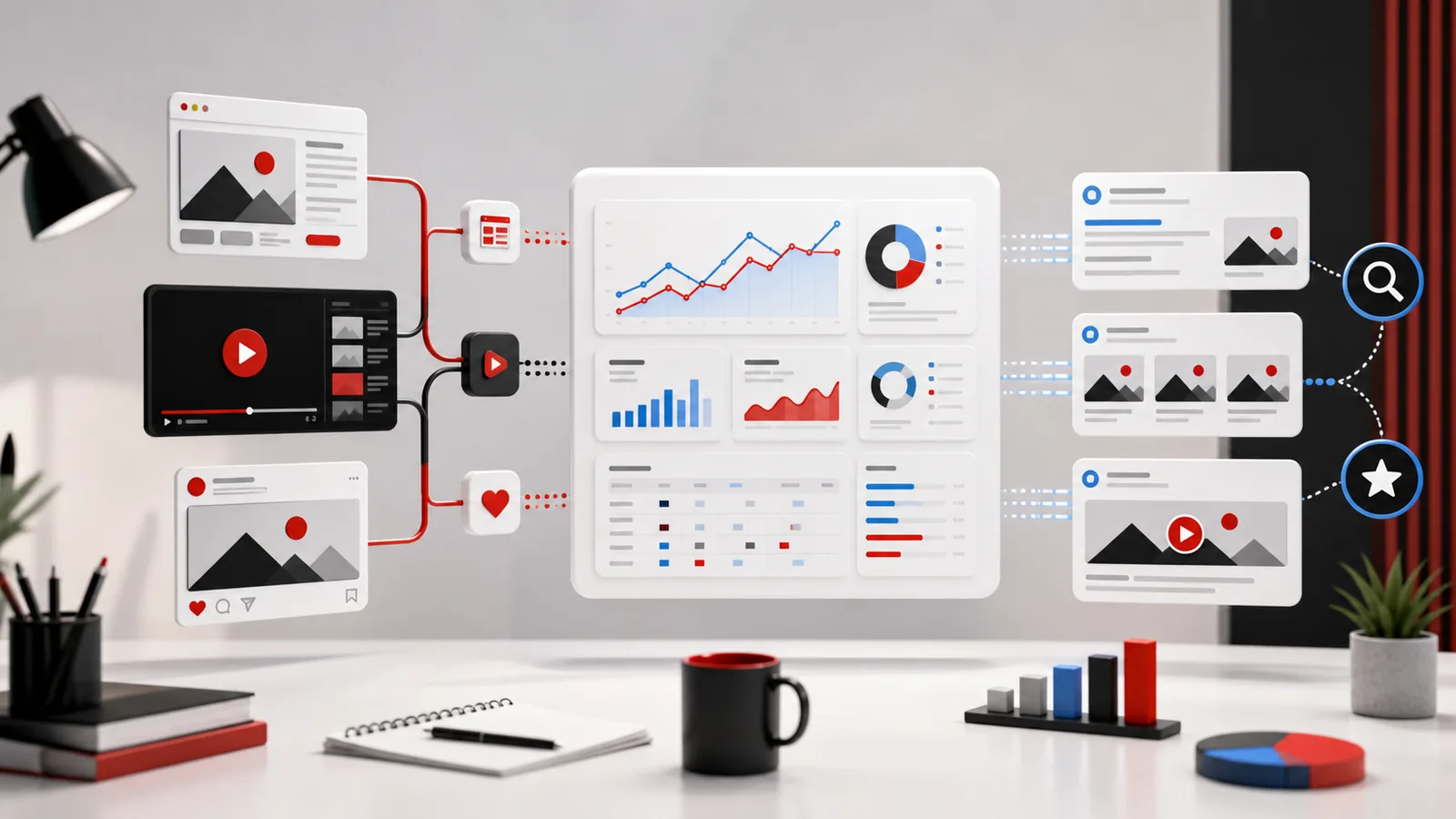
According to Google's documentation, the reports can include clicks, impressions, CTR, average position, queries that led to the content, top-performing posts and recent trends. In practice, this can answer questions many businesses could not measure clearly before: which videos appear in Google, which searches lead to social posts, which types of social content attract Search traffic and how visibility changes over time.
The available reports
Google identifies three main reporting areas. The Performance report shows clicks, impressions and other metrics, with the option to filter by posts and queries. The Insights report provides a quicker view of trends, top-performing content and how users discover the account through Google. Achievements marks growth thresholds, such as a particular level of clicks over the previous 28 days.
These reports are especially useful for teams that publish large amounts of social and video content but lacked a clear view of its impact in Search. For example, a Reel, YouTube video or visual post may receive direct traffic from Google even if the business website is not the final page the user visits.
Why this is relevant to promotion
Online promotion no longer means only paid campaigns or isolated social media posts. A business can be discovered through a service page, an article, a YouTube video, a short clip indexed in Google or a social post appearing in a search result. Platform properties provide a missing part of this picture.
For an agency or a business that manages its own marketing, the data can support better decisions. If certain videos appear frequently in Google for commercial questions, they can be transformed into articles, FAQ pages, landing pages or paid campaigns. If certain social posts gain impressions but few clicks, clearer titles, descriptions or content may be needed.
Google increasingly sees the digital presence as a whole
The strategic message is larger than the feature itself. Google recognizes that people discover brands and information through many channels, not only websites. Measurement must therefore account for content published on platforms where the business does not own the infrastructure, but can still gain Search visibility.
For SEO, this confirms an already visible direction: website content, videos, social posts, original images and external profiles must be coherent. If the website says one thing, social media shows something else and the videos do not support the offer, the digital presence becomes fragmented. If they all work together, Google receives more coherent signals about the brand, services and expertise.
What it means for Instagram, TikTok, YouTube and X
Instagram may become more important for visual, brand, product and location searches, as well as demonstrative posts. TikTok may matter for how-to searches, quick recommendations, comparisons and short-form video. YouTube remains essential for explanatory materials, tutorials, service presentations and demonstrations. X may be relevant for news, opinions, rapid updates and content associated with the authority of a brand or specialist.
Not every platform will matter equally to every business. A clinic, online store, B2B service company and SaaS application have different needs. However, they can all benefit from one common question: which content published outside the website already appears in Google, and what can we learn from it?
How it can be used in strategy
The first step is to connect eligible accounts in Search Console when the feature becomes available. It is then worth monitoring the queries that generate impressions and clicks. If users find a business through recurring questions, those questions should also appear on the website in articles, service pages or FAQ sections.
The second step is to compare Search Console data with native platform data. A clip may perform well in TikTok but poorly in Google, or the reverse. A YouTube video may generate few views within the platform but valuable traffic from Search. These differences support more precise decisions about format, title, description, thumbnail, topic and publication.
What businesses investing in social media should do
Businesses that publish on social media merely to maintain a presence risk losing value. Content must also be built for discovery. This means clear topics, useful descriptions, original images, videos that answer questions, natural titles and coherent connections with the website.
A good social calendar can begin with the same themes used in SEO: customer questions, concrete problems, services, costs, comparisons, demonstrations, results, common mistakes and short explanations. The format is what differs. The website expands, social media attracts attention and video demonstrates. Search Console is beginning to connect these elements through data.
What Web Hat Solutions can do in this context
For clients working on promotion, this feature may become useful in audits and reporting. It is not enough to check only SEO positions or paid-campaign performance. It is also necessary to analyse which social and video content reaches Google, which questions trigger it and how it can be used to increase visibility.
In Web Hat Solutions projects, this direction is directly connected to online promotion, SEO and social media. A complete strategy must unite the website, social content, video, Search Console, Analytics and paid campaigns into a coherent decision-making system.
Important limitations
Platform properties does not replace the platforms' native analytics. It does not show everything happening in Instagram, TikTok, X or YouTube, but only the content's interaction with Google. Data may also appear after several days, and the feature is being rolled out gradually. A conclusion should not be drawn from a single day or a single video.
Another limitation is that the data must be interpreted in context. Many impressions with few clicks may indicate awareness, but may also point to content that fails to persuade the user. A few clicks on a highly commercial query can be worth more than many impressions on a general topic. As in SEO, the quality of intent matters more than raw volume.
Practical checklist for businesses
- Connect social properties in Search Console when the feature becomes available to the account.
- Compare Search Console data with native statistics from Instagram, TikTok, YouTube or X.
- Turn posts that receive Google impressions into articles, FAQs, service pages or clearer videos.
- Measure social media and the website together: queries, clicks, leads, brand search and conversions.
What to remember in practice
Search Console is becoming more useful for a modern digital presence. The website remains the foundation, but Google is making it increasingly clear that social media and video can generate visibility in Search and Discover. For promotion, this means greater responsibility: content published on platforms must be planned, measured and connected to commercial objectives.
Businesses that treat the website, Instagram, TikTok, YouTube and X as parts of the same system will have better data and clearer decisions. Businesses that treat them separately will see only fragments. Platform properties is a concrete step towards measuring the entire digital presence, not only the website.