
Website promotion on Google covers several forms of visibility that operate differently: organic search, Search ads, local results, video content and, for stores, product listings. A sound strategy does not begin by choosing a platform button. It begins by asking when the customer looks for the solution and which page can help that person decide.
SEO can build stable visibility for important topics, while Google Ads can test commercial demand and messaging quickly. Local profiles matter when proximity affects the decision, and well-researched content answers questions that arise before contact. These components are not interchangeable and should not be measured over the same period.
Before promotion starts, the website must be accessible, fast, coherent on mobile and able to record important actions. Otherwise, a campaign pays for visits from people who cannot understand the offer or complete the intended action, while organic optimization attempts to support a page that does not satisfy the search intent.
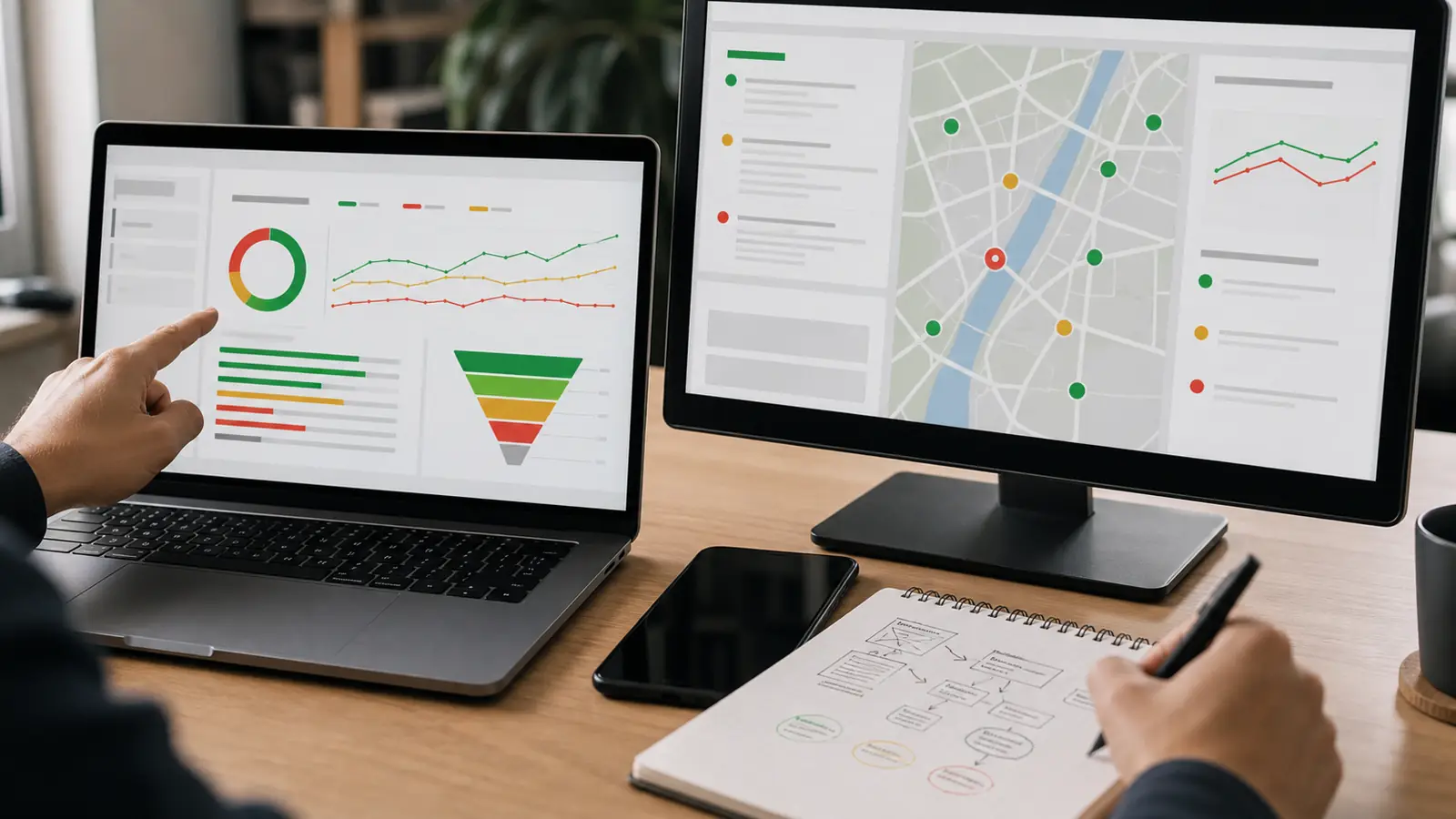
Four questions that define the strategy
- What is the person seeking? Information, a comparison, a local provider, a product or an urgent answer?
- How quickly is the result needed? A campaign can start quickly, while meaningful organic visibility takes time to build.
- What is the action worth? A click is not equal to a qualified enquiry, booking or profitable order.
- Can the page turn interest into action? Offer, proof, speed and the form affect every channel.
What website promotion on Google includes
Organic results
Organic visibility appears when a search engine considers a page relevant and useful for a query. There is no fee per click, but research, writing, development, technical optimization and updates have a cost. For commercial subjects, a superficial page struggles against complete guides, clearly described services and brands that have earned authority over time.
SEO is more than repeating a phrase. The title, headings, examples, images, internal links and structured data must describe the subject accurately. The page must satisfy intent, and the website must allow it to be crawled and indexed without duplicate variants or conflicting signals.
Search advertising
Search campaigns can show an ad when someone enters a relevant query. The benefit is greater control over the message, area, schedule and budget. The disadvantage is that every visit consumes media budget and weak query selection can attract people looking for something else.
Paid promotion makes sense when the offer is competitive, the landing page is appropriate and conversions can be measured. Negative keywords, intent-based grouping and review of actual search terms are recurring work rather than a one-time setup.
Local visibility
For clinics, salons, showrooms, home services and other regional companies, the business profile can be as important as the website. Opening hours, address, service area, phone and services must be consistent. Current photographs and genuine reviews help users decide, but they cannot compensate for the wrong category or outdated details.
Content that prepares the decision
Not every searcher is ready to buy. People compare options, risks, cost, compatibility and project steps. Well-written articles can answer those questions and lead the reader to the appropriate commercial page. Content should reduce uncertainty instead of hiding the answer beneath promotional language.
The technical foundation of effective promotion
A page can receive organic or paid traffic, but visitors decide whether to remain. Check loading on ordinary mobile connections, visual stability, navigation, contrast and readability. Images should be dimensioned and compressed, and the form should be tested through its final confirmation.
Measurement must be designed before launch. Define a conversion as a valid form, initiated call, booking, purchase or meaningful intermediate action. Do not treat a page view as a commercial result. Analytics implementation must also respect the website's consent and privacy requirements.
When to choose SEO and when to choose Google Ads
Choose SEO for subjects customers search consistently and for which the company can provide a better answer. It is suitable for building a library of service pages and articles that can generate visibility over time. It is not instant, and an organic position cannot be purchased directly.
Choose Google Ads when an offer must be tested quickly, when commercial searches matter immediately or when a specific demand period must be supported. Media budget, management and enough data for optimization are required. When a campaign stops, it no longer buys traffic, so the channel should be evaluated through profitability and its role in the mix.
The solution is often combined. Campaign data reveals which messages and offers produce action, while organic content builds durable answers for validated questions. The Web Hat Solutions website promotion page explains how those channels can work together.
How to build the landing page
The page must continue the promise made by the result or ad. A person searching for a local service should not land on a generic company presentation. If the advertisement offers an audit, the page must explain what is checked, who performs it, what the client receives and under which conditions.
- A title that immediately confirms the topic and audience.
- An explanation of the outcome rather than a list of adjectives.
- Verifiable proof: process, examples, limitations, qualifications or genuine testimonials.
- Answers to objections that block the decision.
- One clear call to action and a proportionate form.
Promotion on Google for local businesses
A local company should define its real service area. Relevant towns can be described when that information helps customers, not by automatically multiplying the same page across dozens of locations. Opening hours, response time and travel conditions reduce unsuitable enquiries.
Track calls and enquiries by area, not just clicks. A campaign may attract inexpensive traffic from places the company cannot serve. Geographic exclusions and precise page wording protect the budget, while authentic local content can support organic results.
Promoting online stores
For e-commerce, catalogue structure is fundamental. Product titles, categories, availability, prices and delivery data must remain consistent. Campaigns cannot repair a feed with rejected products, unavailable pages or information that differs between the advertisement and the store.
Measurement must include revenue, margin and returns, not only the number of orders. Two campaigns with equal sales can have very different profitability. For repeatedly purchased products, customer value over time also matters.
A realistic three-stage plan
Stage 1: diagnosis and offer
Select priority services or products, assess demand and competition, then examine the page. Define conversions and commercial constraints: area, capacity, schedule, margin and response time. Without them, promotion may produce more enquiries than the business can handle or emphasize the wrong offer.
Stage 2: controlled test
Begin with a simple structure and enough budget to observe behaviour. Do not mix ten services in one group. Compare actual terms, pages and conversion types. For organic work, publish the pages with clear commercial value first, then resources that answer adjacent questions.
Stage 3: evidence-based expansion
Increase budget or content only where credible signals exist. Expand areas, services and audiences separately so differences remain visible. Keep a change history; optimization without records becomes a series of assumptions.
Mistakes that reduce visibility and consume budget
- Using the same page for every search and advertisement.
- Confusing an organic ranking with paid placement.
- Creating nearly identical pages for every synonym.
- Optimizing for clicks without measuring conversions and enquiry quality.
- Launching before testing forms, phone numbers and the mobile layout.
- Changing budget, message and page at the same time without isolating the effect.
How Web Hat Solutions connects the channels
For organic demand, SEO services cover structure, content and technical quality. For commercial searches that need rapid testing and budget control, the Google Ads service explains campaign preparation, measurement and management.
A mature strategy does not attempt to appear everywhere. It selects searches the company can serve well, builds the right page and measures the action that creates value. Website promotion on Google then becomes a decision system rather than a race for traffic.