NVIDIA introduced the DGX Spark HPC Developer Kit on November 16 in connection with the SC26 conference in Chicago. The development configuration can combine between one and four DGX Spark systems. For the four-unit version, the company cites a total of 512GB of memory and 20TB of NVMe storage, alongside uses in AI and scientific computing.
According to NVIDIA, four systems can collectively host models with up to 700 billion parameters using the NVFP4 format. The claim concerns the distributed configuration and the precision specified by the company. The equipment uses GB10 Grace Blackwell chips with GPU acceleration, and the announced total memory is the sum of resources across the four connected systems.
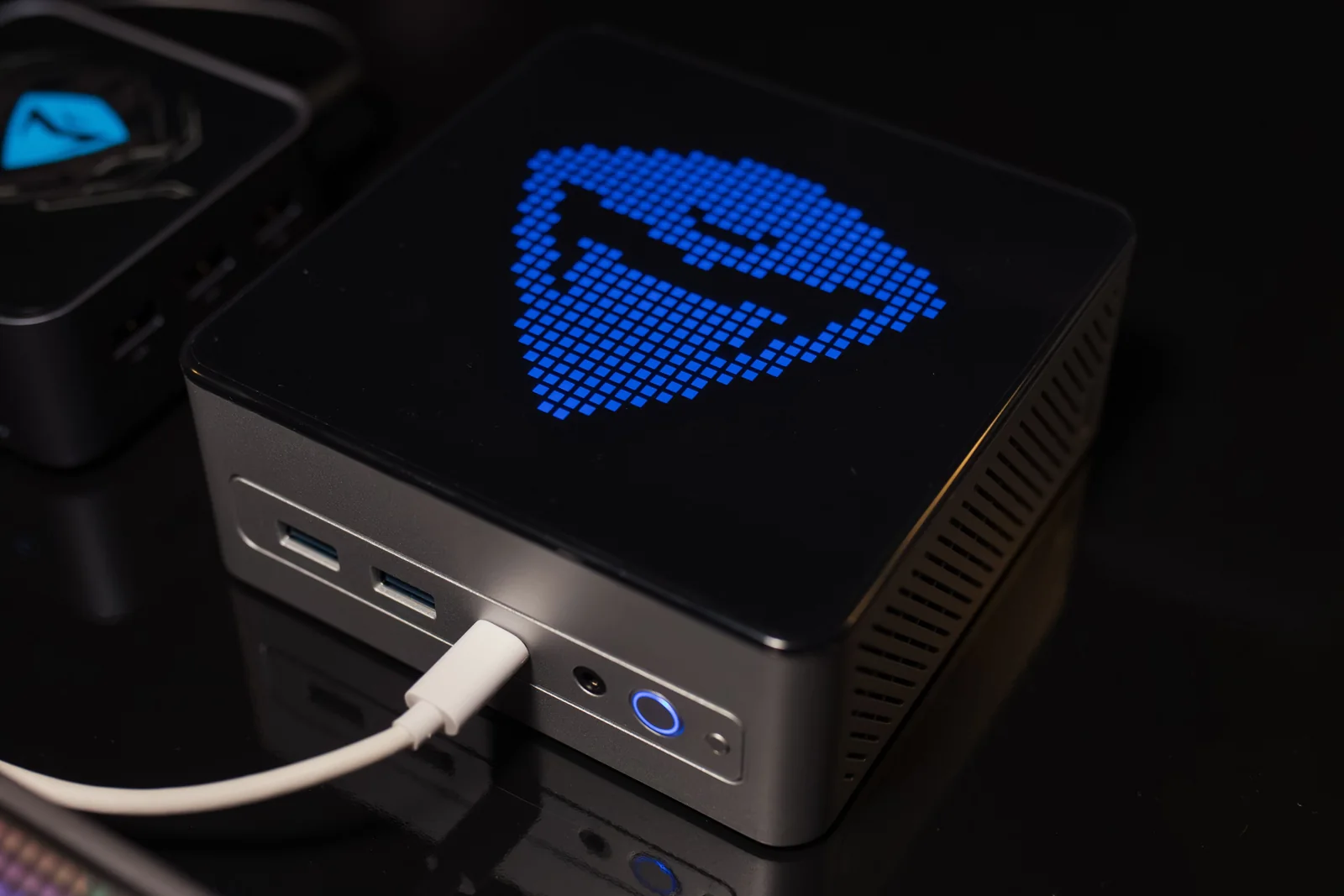
Four computers connected directly in a ring
The systems connect through ConnectX-7 in a ring topology. Each unit connects directly to its neighbors, so the configuration described does not require a network switch. This topology explains how the kit's components communicate with each other and is a central technical element of the announcement about using the systems together for distributed development workloads.
Each DGX Spark has 128GB of unified CPU and GPU memory, according to NVIDIA's hardware documentation. A 20-core Arm processor and Blackwell GPU are integrated into the system architecture. Unification concerns resources within one node; connecting four nodes does not turn their four memory systems into a single physically shared memory pool across the cluster.
In a distributed application, computation and data are divided between nodes, with processes communicating over the network. Software configuration and communication therefore matter alongside total capacity. The 20TB NVMe figure is the kit's total storage stated in the November 16 announcement; it does not describe the working memory used by a model during execution.
Four nodes connected in a ring
| A DGX Spark GB10 128GB memory | B DGX Spark GB10 128GB memory |
| D DGX Spark GB10 128GB memory | C DGX Spark GB10 128GB memory |
What the 700-billion-parameter figure represents
Parameters are the model's numerical values, and the format used to represent them influences the memory needed to store them. NVIDIA explicitly connects the 700-billion threshold with NVFP4. Removing that format qualification would change the meaning of the claim, because the same parameter count can have different memory requirements when represented using other numerical formats.
NVFP4 uses a reduced-precision numerical representation for operations compatible with that format. Its inclusion in the announcement explains one of the conditions for deploying large models on the configuration presented. Compatibility between the model, operations and software components forms part of the execution configuration, alongside the physical resources provided by the computers running the workload.
The capacity to host a model and the speed at which it serves an application are different indicators. Concurrent users, context length and the volume of generated output depend on the actual workload. The model-size announcement is not a response-time measurement for a WebHat application or for the documents and tasks of a particular business.
In an implementation of local AI integrated into custom applications, model resources and the service delivered to the user sit at different levels. Infrastructure executes inference, while the application manages data, access and workflow. NVIDIA's kit primarily concerns the first part of that architecture: compute capacity and the environment used by developers.
Scientific computing is an important part of the kit
NVIDIA also presents the configuration for developers working with high-performance computing applications. The context includes C, C++, Fortran and MPI alongside GPU acceleration. MPI is used for communication between processes in distributed applications, explaining the relevance of the connections between systems within this type of development environment and the workloads described in the announcement.
Among demonstrations associated with the four-system configuration, the company mentions LAMMPS with Kokkos and NAMD. These are examples from molecular simulation and scientific research. Their inclusion describes specific workloads and demonstrations, rather than making the kit a product intended exclusively for conversational assistants or a single family of language models used in business applications.
NVIDIA's material also discusses a wider ecosystem of applications and community contributions, naming GROMACS, OpenFOAM and WRF. These references have a broader scope than the individual demonstrations of the four-node configuration. Membership of the ecosystem and validation of a workload on a particular hardware setup are separate pieces of information that need to be read separately.
In models for specialized domains, the presentation includes adaptation recipes for Nemotron 3.5 Super VL in life sciences and chemistry. Such material concerns adapting capabilities to research tasks. It complements the infrastructure component alongside simulation examples and tools for developing accelerated applications, showing that the announcement covers more than the size of a language model.
Hardware availability and documentation have separate stages
The kit is being shown at SC26 and offered for sale through OEM partners and channels indicated by NVIDIA. In the same announcement, the HPC SDK installation playbook is described as forthcoming. Hardware availability and publication of each documentation component are therefore separate stages of the release, with their status specified individually by the company.
One workflow illustrated by NVIDIA uses agents to prepare simulation inputs, launch runs and summarize results while researchers validate the setup and conclusions. The kit is presented for development, debugging and checking applications across multiple nodes before production runs on larger infrastructure. This describes the role of the development environment within the scientific workflow.
Reading the announced specifications
| Element | Configuration presented | Relevant condition |
|---|---|---|
| Number of systems | Between one and four DGX Spark units | Resources increase with the configuration |
| Memory and storage | 512GB and 20TB NVMe | Totals for four systems |
| Model size | Up to 700B, according to NVIDIA | NVFP4 format and distributed execution |
| HPC SDK documentation | Installation playbook announced | Publication is forthcoming |
A specialized local development configuration
The term “local” describes where compute resources are installed and used. By itself, it does not specify a system's size, cost or complexity. For the DGX Spark HPC Developer Kit, NVIDIA proposes a compact distributed configuration with GPU acceleration and tools for applications able to use multiple nodes within the same development environment.
For business owners interested in large models, the announcement provides a concrete reference for resources and the conditions attached to the figures. The model, numerical representation, number of systems and software together form the configuration described. These elements separate a technical capability presented by a supplier from the requirements and results of an individual business implementation.