Intel and RadixArk announced a collaboration on November 12 to optimize SGLang, an open-source engine used to serve AI models. The companies aim to integrate contributions into the main project and expand execution options on Intel platforms. The announcement concerns inference infrastructure: the component that loads a model and processes requests sent by applications using that model.
The collaboration covers processors, graphics cards and accelerators, referring to the use of Intel hardware capabilities including AMX. Intel presents performance, deployment and economic-efficiency objectives. The communication does not include an independent benchmark with numerical results that would support assigning a uniform improvement to every configuration or every model using the SGLang inference engine.
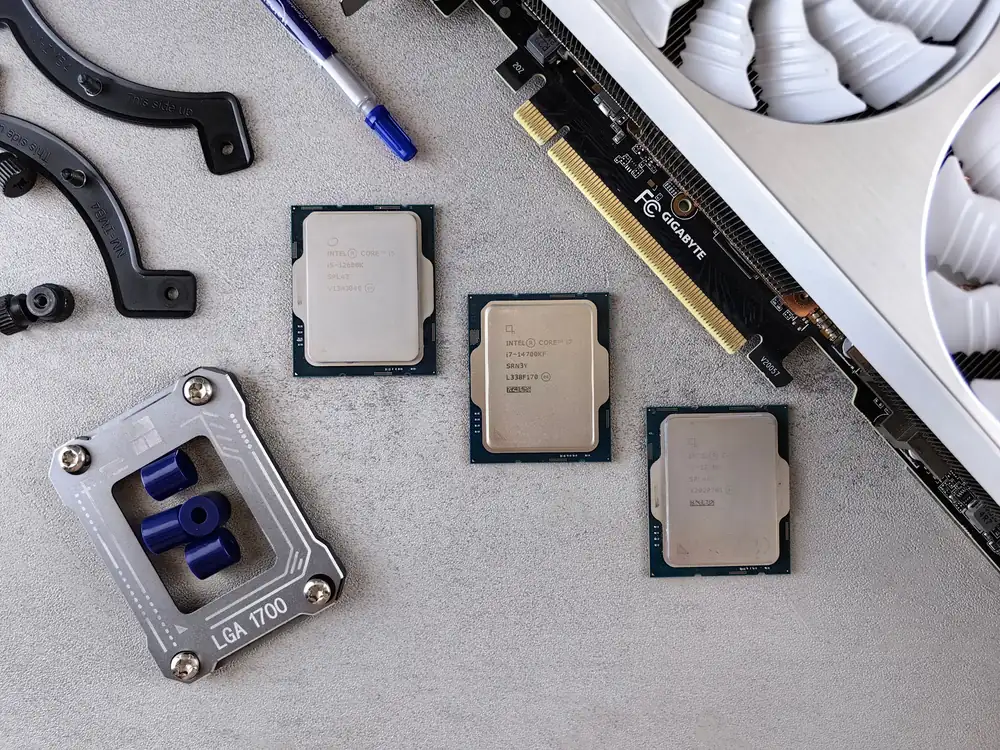
An inference engine between the model and the application
SGLang is an execution component, separate from model files and the business application's interface. A model contains its parameters and configuration, while the engine manages its use for requests. The application adds user authentication, business data and the rules of the process in which people or other systems actually use the output produced by the model.
Through contributions to the main project, optimizations can be developed and maintained within the same open-source framework instead of existing exclusively in a separate supplier version. This is the collaboration direction announced by Intel and RadixArk. The availability of a concrete optimization is established through the version and documentation of the implementation that includes it.
The expression “open AI inference” in Intel's communication refers to open AI inference and the software ecosystem. The announcement names Intel and RadixArk as partners. It does not describe a commercial agreement with the company OpenAI, even though an inference engine's technical documentation can separately use the OpenAI name to describe compatibility with programming interfaces.
The CPU documentation targets specific Intel Xeon configurations
SGLang's CPU execution documentation describes optimizations for fourth-generation and later Intel Xeon Scalable processors with AMX support. The specified scope is a server environment. A laptop with an Intel Core processor does not become part of the same configuration simply because its processor carries the brand of the same manufacturer as the supported server hardware.
AMX refers to hardware extensions for matrix operations used in AI computation. In the CPU documentation, the torch.compile optimization path is described for response generation, while its use for the initial prefill stage is an experimental option. Compatible processors and software implementation together form the execution path; the processor brand alone does not identify that configuration.
The CPU documentation uses model-family examples such as Llama, Qwen and DeepSeek and discusses organizing server execution. Technical elements include binding processes to CPU cores, parallelism groups and NUMA topology. These details describe resource management within a concrete configuration, rather than a universal memory threshold that applies to every model served through the inference engine.
NUMA concerns the relationship between processors and memory regions in a multiprocessor system. Memory access and process placement therefore form part of the execution configuration. For an inference engine running on such a server, simply listing total RAM capacity does not describe all the conditions under which the system processes the workload sent to it.
Scopes described by the announcement and SGLang documentation
| Component | Specified scope | Stage or condition |
|---|---|---|
| Intel–RadixArk collaboration | Optimizations in the SGLang project | Announced development program |
| Optimized CPU execution | Fourth-generation and later Xeon Scalable | Processor and software path with AMX |
| XPU execution | Arc B-Series and Arc Pro B-Series | Model and configuration compatibility |
| Experimental functions | Options identified separately in documentation | Distinct from overall platform support |
GPU support has its own execution path
The XPU documentation describes optimizations for Intel Arc B-Series and Arc Pro B-Series cards. That scope is more precise than the general phrase “Intel GPU.” Hardware family, generation and the model being used matter when reading the support list, including where a business already has computers with integrated graphics from the same manufacturer in its offices.
This documentation includes examples for Llama and Qwen models, along with diffusion-generation workloads. Examples are tied to specific configurations and technical recommendations. The presence of a family in a list does not mean that every size, numerical format and function in that family has identical requirements or the same level of validation on the hardware.
Part of XPU support concerns MXFP4 representation for certain mixture-of-experts models. The path described for these operations targets the Xe2 architecture, also known as BMG. In the documented implementation, not every model component automatically uses the same precision; some remain in BF16, while the scope of validated functions is specified separately in the documentation.
The documentation also labels experimental options. On CPU, an experimental option concerns the prefill stage associated with compilation; on XPU, mechanisms such as certain execution graphs and memory management are described separately. An option's label needs to be preserved when describing availability, rather than extending that label to every function supported by the platform as a whole.
Model memory and request context are different components
Serving an autoregressive language model includes processing the initial request, called prefill, and generating the response successively, called decode. The KV cache retains attention state used for the context. CPU documentation includes configurable limits for this memory. Model parameters, request context and concurrency therefore need separate treatment when describing the resources of an inference service.
Request-interface compatibility is another implementation level. The documentation includes use of an OpenAI-compatible completions interface. That compatibility concerns the request format described, rather than the identity of the model or the availability of every commercial feature from another provider. The served model and local engine remain the actual components producing the response to the application's request.
For custom applications with AI integration, the inference engine is the technical service to which the application can send requests. Its selection relates to the model, resources and functions needed by the business process. The Intel–RadixArk collaboration concerns expanding these choices at the infrastructure level where the model is executed and served.
What is confirmed at this stage
The new information is the collaboration agreement and the direction of contributions to SGLang. Current technical documentation separately shows support scopes already described, concrete configurations and experimental options. The two levels complement each other, but do not make every documented function a new result of the partnership announced by the companies on November 12.
For businesses considering inference on their own infrastructure, the announcement provides a reference for the development ecosystem and targeted hardware families. An outcome for a concrete implementation is expressed through its measured configuration and workload. At this stage, Intel and RadixArk communicate collaboration objectives, while SGLang documentation specifies the technical conditions of the execution paths it describes.