
As of 22 July 2026, Google does not list any official Core Update for July in the Search Status Dashboard. The latest official ranking update is the June 2026 Spam Update, which began on 24 June 2026 and was completed on 26 June 2026. The latest official Core Update remains the May 2026 Core Update, which began on 21 May 2026 and was completed on 2 June 2026.
This does not mean that fluctuations cannot occur in July. They can. However, a fluctuation observed by SEO tools, the community or a particular website should not automatically be called a “new Google Core Update” if Google has not officially confirmed it.
What has been officially confirmed
The Google Search Status Dashboard is the official source for incidents, updates and important statuses concerning Google Search systems. In the public history, at the time of the check on 22 July 2026, no Core Update appears for July.
The most recent official update is the June 2026 Spam Update. It began on 24 June 2026 and ended on 26 June 2026. Before it, the latest confirmed Core Update was the May 2026 Core Update, launched on 21 May 2026 and completed on 2 June 2026.
Why fluctuations can still occur in July
Search fluctuations can occur without a confirmed Core Update. Google continuously runs ranking systems, tests, interface changes, quality adjustments, local updates, crawling changes, SERP changes and content re-evaluations. In addition, a website can lose or gain traffic for reasons unrelated to a global update.
For this reason, if traffic falls in July, the first question should not be “which Google update happened?”, but “what specifically changed for our pages, queries and conversions?”. The diagnosis should begin with Search Console, Analytics, page logic and user behaviour.
What this means for SEO
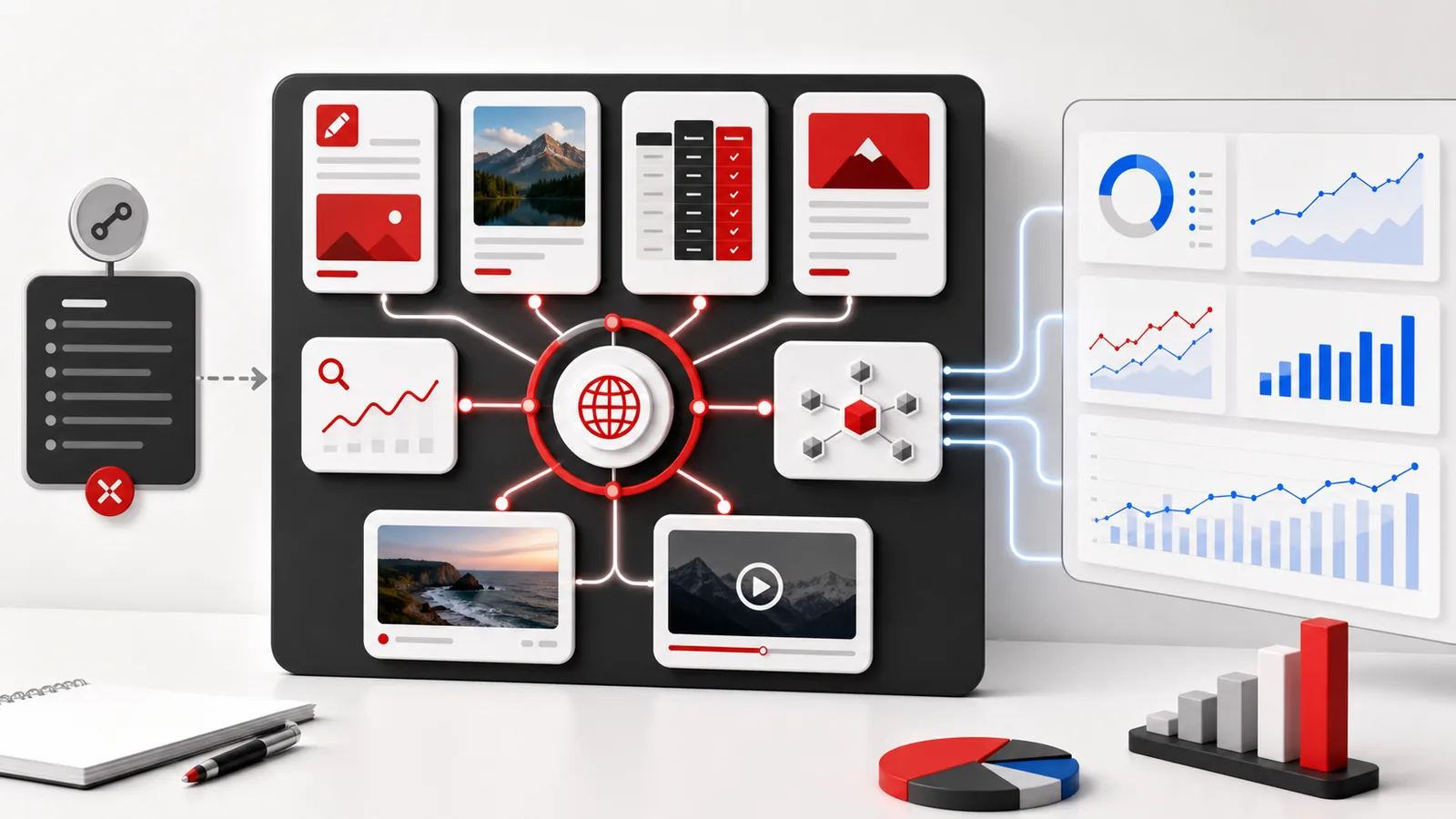
SEO is not disappearing, but its objective is changing. Holding a good position for a keyword is no longer enough. Search is becoming more visual, more multimodal and more influenced by AI answers, while users can receive information before visiting a website.
Content must be valuable enough to be used and cited in AI answers, clearly associated with a brand or specialist, found through the website, social media, images and video, and subsequently searched for directly by company name. Ranking remains important, but it is no longer the only signal that matters.
What kind of content will have an advantage
Generic content is becoming increasingly vulnerable. If an article can be reconstructed almost identically from another hundred articles, its value decreases. By contrast, original content based on real experience, proprietary data, direct observations and concrete examples is harder to replace with an automated summary.
This includes original photographs, real comparisons, case studies, clear answers, project screenshots, demonstrations, process examples, local data, transparently explained prices and information that only the company or specialist can provide credibly.
Why the brand matters
As AI Search provides more answers directly on the page, the brand becomes a mechanism for protection and growth. If a user sees an explanation, citation or recommendation and then searches directly for the company name, the website has an advantage over generic traffic that depends solely on its position for a keyword.
SEO should therefore also track brand searches, not only general queries. Growth in searches for the company name, services associated with the brand or combinations such as “Web Hat SEO”, “Web Hat custom applications” or “Web Hat promotion” may show that visibility is starting to create recognition and trust.
We do not recommend blocking Google or disabling AI Search
For most businesses, blocking Google or opting out of appearances in AI Search is not a sound recommendation. Google states in its Search Console documentation that properties which choose not to appear in generative AI Search features will not receive impressions or traffic from those features. Google also says that this option is not used as a ranking signal for non-AI results.
In practical terms, you can stop appearing in AI features, but you also lose the opportunity for visibility and traffic from that area. For a large publisher, the decision may be part of a negotiation or content-protection strategy. For an ordinary commercial website, the risk is usually greater than the benefit.
What must be measured separately
A healthier approach is to measure each signal separately. Positions show where the website appears in traditional results. Impressions show where Google considers the content relevant. Clicks show how persuasive the result is or how much the SERP allows traffic to pass through. Brand searches show whether visibility is becoming memorable. AI citations and appearances show whether the page is being used as a source in new experiences.
These signals must be read together. If positions remain good but clicks fall, the issue may involve CTR, a crowded SERP or AI Overviews. If impressions fall, there may be a relevance, indexing or content issue. If brand search grows, part of the impact may appear indirectly, not only through a traditional organic click.
How to investigate a July decline
If a website declined in July 2026, the analysis must be segmented. The correct comparison is by pages, queries, countries, devices and similar periods. Traditional organic traffic must be separated from Discover, social, direct and campaign traffic. It is also necessary to determine whether the decline affects the entire website or only certain pages.
The next step is to check whether the affected pages lost positions, whether impressions fell, whether CTR declined or whether search intent changed. Without this separation, every fluctuation is blamed on an unconfirmed update, which leads to poor decisions.
What to do instead of following update rumours
The priority is to strengthen important content. Commercial pages must be clear, substantial and differentiated. Articles must answer real questions and contribute information that users cannot find in identical form everywhere else. Images must be original and optimized. Videos and social media must be connected to the same strategic topics.
In Web Hat Solutions projects, this direction is directly connected to SEO, AI and LLM optimization and online promotion. We do not merely follow Google updates; we build a digital presence that is harder to replace: original content, clear structure, brand, measurement and continuous adaptation.
Practical checklist for businesses
- Do not automatically attribute July fluctuations to an unconfirmed Core Update; check Google's official dashboard first.
- Segment the analysis by pages, queries, countries, devices and comparable periods.
- Track positions, impressions, clicks, CTR, brand searches and appearances in AI reports separately.
- Invest in content the company can support with real experience: case studies, original photography, comparisons and clear explanations.
What to remember in practice
As of 22 July 2026, there is no officially confirmed Google Core Update for July. The latest official ranking update is the June 2026 Spam Update, while the latest official Core Update is the May 2026 Core Update. July fluctuations should be analysed seriously, but they should not automatically be labelled a Google update without official confirmation.
For SEO, the direction remains clear: less dependence on generic content and greater emphasis on originality, real experience, brand, original images, case studies, useful answers and separate measurement of all important signals.