
Meta is expanding its automatic translation features for Reels so that a short video can be translated, dubbed and visually synchronized for several languages. From 14 July, Instagram can use AI technology to adapt creators' voices and lip movements into languages including French, German, Italian, Japanese and Korean. Romanian has not yet been listed among the available languages.
For businesses, the change matters because it lowers the barrier to entering international markets. A single video can become more accessible to different audiences without separate filming for every language. The feature should, however, be treated as a localization tool, not as a guarantee that the message will automatically work in every market.
A poorly translated Reel can cause confusion even when it is technically synchronized. An intelligently localized Reel can open new conversations. The difference depends on strategy, message, cultural context and human review.
What expanded automatic translation means for Reels
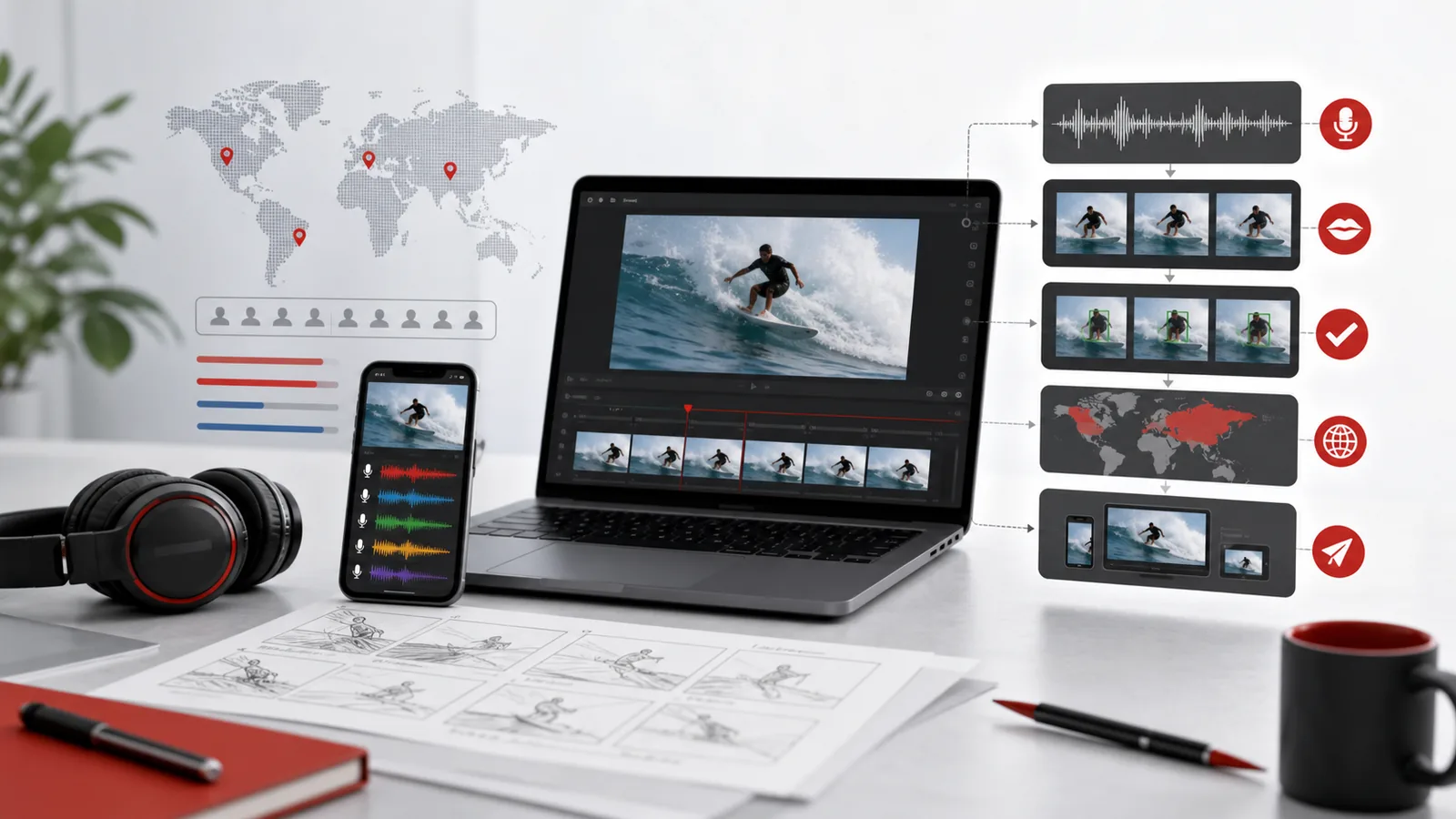
The feature combines three elements: translation of the message, voice dubbing and lip synchronization. Instead of merely reading subtitles, the user can hear the content in another language, while the image can be adapted so that the speech appears more natural.
This type of localization differs from conventional subtitling. Subtitles help, but retain a distance between voice and language. Synchronized dubbing can make content easier to follow for audiences that prefer to consume video without additional effort.
The benefit for creators is clear. For companies, it appears especially when there is evergreen content: service explanations, demonstrations, tutorials, product presentations, mini case studies or brand messages that may also be relevant in other markets.
Why it matters to businesses seeking international visibility
Many businesses avoid international video content because production appears expensive: a separate script, separate voice, and filming or editing for every language. Automatic Reels translation can reduce some of this friction.
If a business already has strong video content in its primary language, it can be tested more easily in other languages. A product tutorial, service presentation or educational message can reach audiences that might otherwise have ignored the content.
This change may be relevant to online shops, local brands that deliver internationally, educators, consultants, SaaS businesses, custom applications, tourism services, clinics, manufacturers and B2B companies with audiences in several countries.
What should not be misunderstood
Automatic translation does not amount to a complete international strategy. A new market is not just a new language. It has different behaviours, sensitivities, examples, objections and expectations. A message that works in Romania may need adjustments for Germany, Italy or Japan.
Nor should a translated Reel be expected to achieve better results automatically. It may become more accessible, but performance still depends on the subject, the beginning of the video, clarity of the offer, visual quality, relevance to the audience and continuity of the account.
Furthermore, the fact that Romanian has not yet been listed among the languages in this expansion means that Romanian businesses should monitor the feature without building a plan that depends exclusively on it.
When the feature is worth using
The feature is worth testing when the content has value beyond the local market. A visually demonstrated product, digital service, application, working method or tutorial, for example, may be relevant to several audiences.
It is also worth using when a business wants to validate interest in a new market before making a large investment. Instead of completely rebuilding all its materials, it can test a few localized Reels and monitor signals such as retention, saves, comments, messages and website traffic.
Within a social media promotion strategy, this feature can become a testing stage: select the best-performing content, localize it carefully, review the message and measure the response.
What to check before publication
- whether the target language is available in the account;
- whether the translation preserves the message's real meaning;
- whether the voice and tone suit the brand;
- whether the lip synchronization creates an artificial or unconvincing effect;
- whether the examples in the video are relevant to the international audience;
- whether the landing page exists in the appropriate language.
The final point is critical. If a translated Reel directs the user to a website available only in Romanian, the experience breaks down. The video may generate interest, but conversion requires a suitable page, form, message and support.
Impact on the website and conversions
A translated Reel can attract international attention, but the website needs to be able to continue the conversation. For businesses seeking customers outside Romania, relevant pages should have correct language versions rather than uncontrolled automatic translations.
This connection matters in Web Hat projects. Social media can open a market, but the website explains the offer, shows evidence, captures the enquiry and supports trust. Video localization should therefore be planned together with service pages, forms and the conversion path.
If the business also runs paid campaigns, translated materials can inspire tests in Meta Ads. Media budget should, however, be used only after the localized message has been reviewed and the landing page is ready.
Web Hat's recommendation
The recommendation is not to localize every Reel. First choose the materials that have already worked: they have good retention, a clear message, relevant comments and a connection to a real offer. Then test one or two languages that fit the company's objectives.
After publication, do not monitor views alone. Quality signals matter more: who comments, what questions arise, whether private messages appear, whether there is traffic to the website and whether the new audience understands the offer.
The feature is an important step towards more international social media content, but it does not remove the need for strategy. Translation opens the door. Clarity, evidence and the complete experience decide whether the user goes any further.
Sources
- Instagram - announcement on expanding AI translations for Reels into Japanese, Korean, French, German and Italian.
- Meta - official context on AI Translations on Reels, dubbing, lip sync and previewing before publication.
- Instagram Help Center - general documentation on captions and language tools for video content.